When people decide to start a Human Design business, one of the first questions is usually: What exactly should I offer?
A Human Design reading? Coaching? Reports? Workshops?
And then come all the other questions. Who would pay for it? Where do you find clients? Do you need a website? How do you stand out when there are already so many Human Design practitioners?
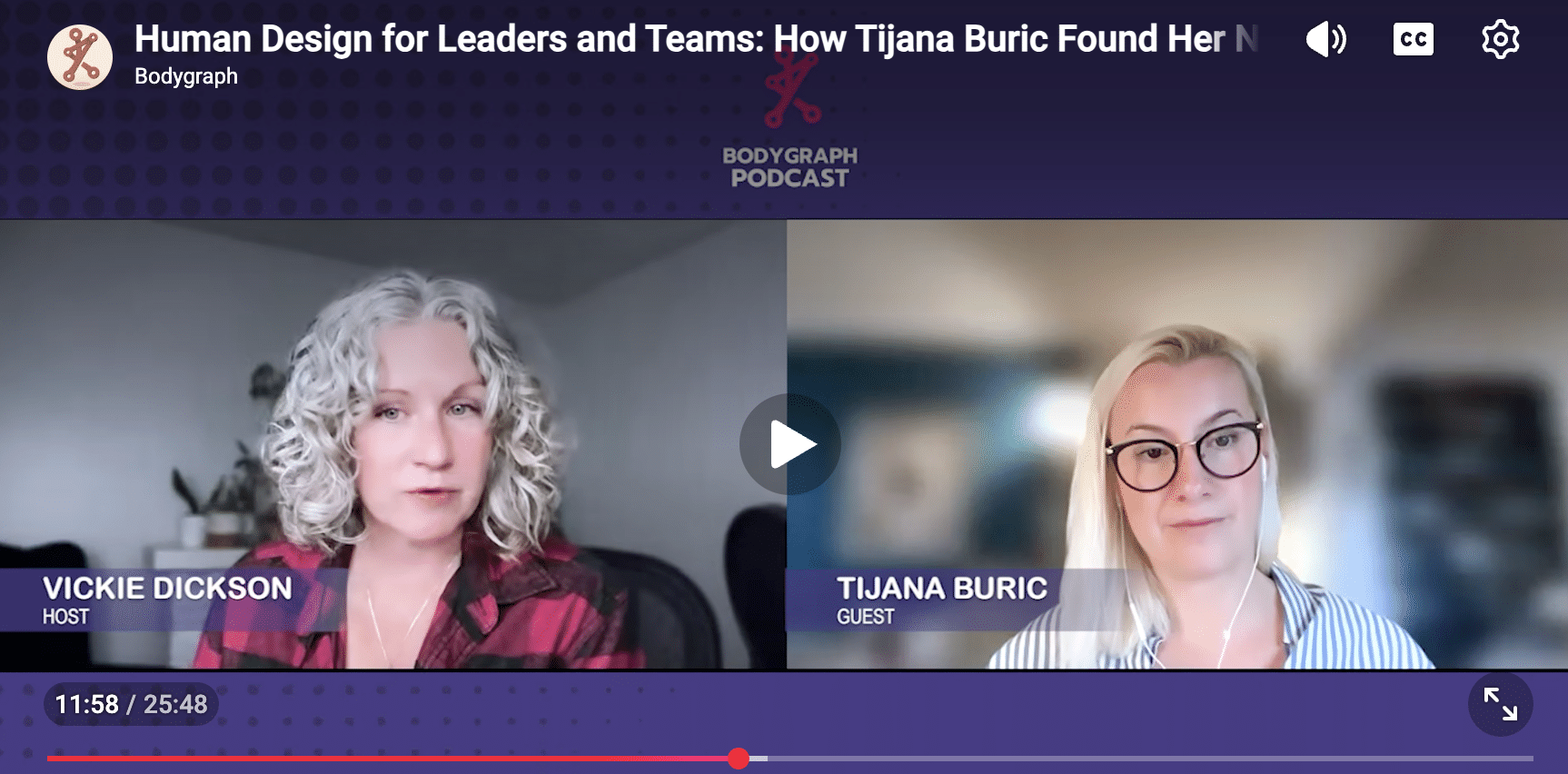
On the Bodygraph podcast, we spoke with Tijana Buric, founder of Career Alchemist, about how she built her business using Human Design.
Her story is interesting because she didn’t start with a fully developed business idea or a clearly defined audience.
She started by sharing what she was learning.
Today, she works with founders and leaders, helping them understand their strengths and build better teams. Human Design is part of her work, but it isn’t the only thing she offers.
Here’s what we learned from her experience.
She didn’t start as a Human Design practitioner
Before starting her business, Tijana spent ten years working in accounting, tax and consulting at Big Four firms.
She was a CPA, but she knew she wanted to do something more creative.
After discovering Human Design and Gene Keys, she began looking at her career differently. She eventually left corporate work, trained in executive coaching and started combining coaching with Human Design.
But she didn’t offer traditional Human Design readings.
Instead, she looked at how people could use their charts to understand their careers, leadership and businesses.
That distinction became important later.
Today, she uses Human Design at three levels: leadership, teams and organisations. Her work includes helping founders understand how they operate and what kind of team they need around them.
The lesson for someone starting a Human Design business is that you don’t necessarily need to leave your previous experience behind.
If you’ve worked in education, you might understand the challenges teachers or parents face. If you’ve worked in management, you might already know the problems business owners struggle with.
Human Design can become another tool you bring into work you already understand.
As the podcast host pointed out, finding a niche doesn’t have to mean becoming a completely different person overnight. Sometimes it’s about combining your existing skills, experience and Human Design knowledge.
Her first clients came from free workshops
When Tijana started learning Human Design, she also started teaching it.
She organised free online workshops where she explained how people could use Human Design in their careers and businesses.
These workshops helped her understand the system better, but they also introduced her to potential clients.
People attended, became interested in her approach and some went on to book readings.
She didn’t have a carefully defined ideal customer at that stage.
Her first audience was mostly friends, friends of friends and people who heard about her through personal connections.
She shared her work and paid attention to who was interested.
Over time, she noticed that founders and leaders who had already explored personal development were particularly interested in what she offered.
That helped her understand her audience.
What can you do if you’re just starting?
You could organise a small workshop for five or ten people around one specific problem.
For example:
- How to use Human Design when making career decisions
- Understanding your child’s Human Design
- Human Design for business owners
- How couples can explore their differences through Human Design
You don’t need to teach the entire Human Design system.
Choose one subject, invite people and see what questions they ask.
The questions people bring to your workshops can help you understand what they actually need.
Your clients don’t need to understand Human Design terminology
One particularly interesting part of the conversation was how Tijana communicates Human Design to business leaders.
She realised that terms such as Manifestor, Projector and Generator don’t necessarily mean anything to someone working in a corporate environment.
So she changed the language.
For example, she calls a Manifestor a “Catalyst”.
She also developed her own Human Design at Work facilitation cards, with visual representations of different types and concepts.
Her goal wasn’t to change the underlying system. It was to explain it in language her audience could understand.
This is something the podcast host strongly agreed with.
Practitioners often know Human Design terminology so well that they forget their clients might be hearing it for the first time.
Think about someone looking for help with their career.
They might not search for a reading about their gates, channels or authority.
They might simply want to understand why they’re unhappy at work or how to make their next career decision.
Start by talking about the problem your client wants to solve. Then explain how Human Design fits into that conversation.
A 200-page report isn’t always more valuable than one page
Tijana shared another interesting experience.
She previously created an automated leadership report of around 30 pages. It included her methodology and initially sold well at workshops.
But as AI tools became more accessible, she began questioning whether a static report was still the best product to offer.
She started developing something different: a one-page Career Manifesto.
It’s designed as a personal work-with-me guide, showing someone’s potential rather than simply listing their past experience.
Why one page?
Because people often don’t have time to read everything.
She mentioned a client who had received an AI-generated Human Design report of around 150 to 200 pages. The client didn’t want to spend hours trying to understand every gate. She wanted to know what was relevant to her situation.
Tijana also remembered her own experience discovering Gene Keys. One sentence about entrepreneurship had made a lasting impression on her.
It wasn’t the length of the report that mattered. It was the relevance of the message.
What this means for selling Human Design reports
If you’re planning to sell personalised Human Design reports, think carefully about who will read them.
Someone interested in relationships might want to understand communication, conflict and emotional differences.
Someone exploring a career change might want practical insights into their working style and decisions.
A detailed report can still be valuable, especially for clients who want to study their chart deeply.
But more pages don’t automatically make a better product.
Sometimes a short, focused report that answers one important question is more useful than a long explanation of everything in a chart.
Ten people in a room can be better than 100 on Zoom
Tijana started her business during the pandemic, when online workshops were a natural way to reach people.
But eventually she found that spending so much time on Zoom wasn’t working for her.
She began organising in-person workshops in coworking spaces, founder communities and other creative environments.
During one recent workshop, 12 people attended.
They worked in small groups, discussed their experiences and built connections.
For Tijana, this was more valuable than trying to attract a large online audience that might not be engaged.
She now uses monthly in-person workshops to test different topics, understand what people respond to and develop her services.
This doesn’t mean online workshops are ineffective.
It means you should consider where your audience is and how you work best.
If you enjoy meeting people, a local workshop or small group session might be a good way to start.
You might find your first clients through a conversation rather than an advertising campaign.
Don’t spend months building something nobody has tested
One thing Tijana wishes she’d done sooner is test her ideas.
She explained that, after spending years building a professional career, she felt pressure to present herself as an expert.
But she was starting something new.
Looking back, she believes she would have benefited from approaching more people, asking questions and testing ideas before developing complete products.
She’s applying that lesson to her current business.
She’s building a platform for leaders and teams using Human Design, but she hasn’t waited until every feature is finished.
Instead, she’s already using an early version in workshops and collecting feedback.
As Tijana said during the conversation:
“You cannot create a perfect offer without the audience.”
That’s useful advice for anyone planning their first Human Design product.
Before spending months creating a course, a large report collection or an expensive website, try selling or testing one small offer.
Find out whether people are interested, what they expect and what they find useful.
Then improve it.
How Tijana finds clients today
Tijana now uses LinkedIn as her main social media channel.
That makes sense for her business because she works with founders, leaders and teams.
She’s also building relationships through in-person events, professional communities and workshops.
Interestingly, she shared that one client found her through ChatGPT while looking for Human Design for teams.
She also receives enquiries from people she knew through college or previous workplaces.
These aren’t necessarily people she expected to become clients.
Her experience shows why it’s worth talking openly about your work, even before you have a large audience.
Your first clients might already be somewhere in your existing network.
And as you develop your business, you can become more specific about the people you want to work with.
Five things you can do to start your Human Design business
If you’re at the beginning, here’s a simple way to put some of these ideas into practice.
1. Choose one audience you understand
Think about your previous work, interests and life experience. Who do you already understand well enough to help?
2. Pick one problem to focus on
Instead of offering everything in Human Design, start with a specific subject such as career decisions, relationships, parenting or leadership.
3. Organise a small workshop
Invite people from your existing network. Teach something useful and listen to their questions.
4. Create one simple paid offer
It could be a personal reading, a focused report or a follow-up consultation. Make it clear what the client will receive.
5. Improve your offer based on real conversations
Notice which questions come up repeatedly, what clients value and what they still find confusing.
You don’t need to have your entire business planned before taking these steps.
Where to learn more about building a Human Design business
At Bodygraph, we work with Human Design practitioners who are at different stages of building their businesses.
Some are just learning how to work with clients. Others are developing reports, growing email lists or selling their own products.
We’ve created free training and practical resources through Business Mastery Hub to help with those steps.
You can also explore our How to Start a Human Design Business course for more guidance.
And if you’d like to hear Tijana’s full story, including how she moved from corporate accounting into coaching, developed Team Chemistry and started building her own platform, listen to our podcast episode:
Human Design for Leaders and Teams: How Tijana Buric Found Her Niche
One thing from the conversation is worth remembering.
Tijana didn’t find her business model in a single moment. She started with free workshops, worked with individual clients, learned what wasn’t working and gradually developed something more specific.
And she’s still testing new ideas.
You can start with what you know today and let real experience help shape what comes next.