Bodygraph surveyed 193 users to understand how Human Design practitioners use charts, reports and technology in their professional work. Approximately 90% of respondents had worked with Human Design for more than one year, 72% gave Bodygraph a perfect recommendation score of 10, and more than 97% were open or potentially open to a feedback interview.
The results show that Human Design practitioners are using Bodygraph for more than chart generation. They are incorporating it into client readings, coaching, consulting, content creation and the delivery of personalised reports.
Key Findings from the Bodygraph Community Survey
- 193 Bodygraph users completed the survey.
- 152 respondents identified as Human Design practitioners.
- 130 respondents identified as coaches.
- 90% had worked with Human Design for more than one year.
- 72% gave Bodygraph a recommendation score of 10 out of 10.
- The average recommendation score was 9.44 out of 10.
- More than 97% were open or potentially open to a feedback interview.
- Bodygraph’s wider international community extends across 55 countries.
What Is a Human Design Practitioner?
A Human Design practitioner helps people understand and apply information from their Human Design chart. Practitioners may offer individual readings, coaching, relationship guidance, business consulting, educational programmes or personalised reports.
Many practitioners combine Human Design with another professional discipline. The survey found considerable overlap between Human Design, coaching, consulting, therapy and content creation.
Who Uses Bodygraph?
Human Design practitioners were the largest professional group represented in the survey, but respondents came from several related fields.
- 152 identified as Human Design practitioners.
- 130 identified as coaches.
- 69 identified as business consultants.
- 46 identified as content creators.
- 31 identified as Human Design students.
- 20 identified as therapists.
- 18 selected another professional role.
Respondents could select more than one role, so these numbers should not be added together as a total. One respondent might be a Human Design practitioner, coach and content creator at the same time.
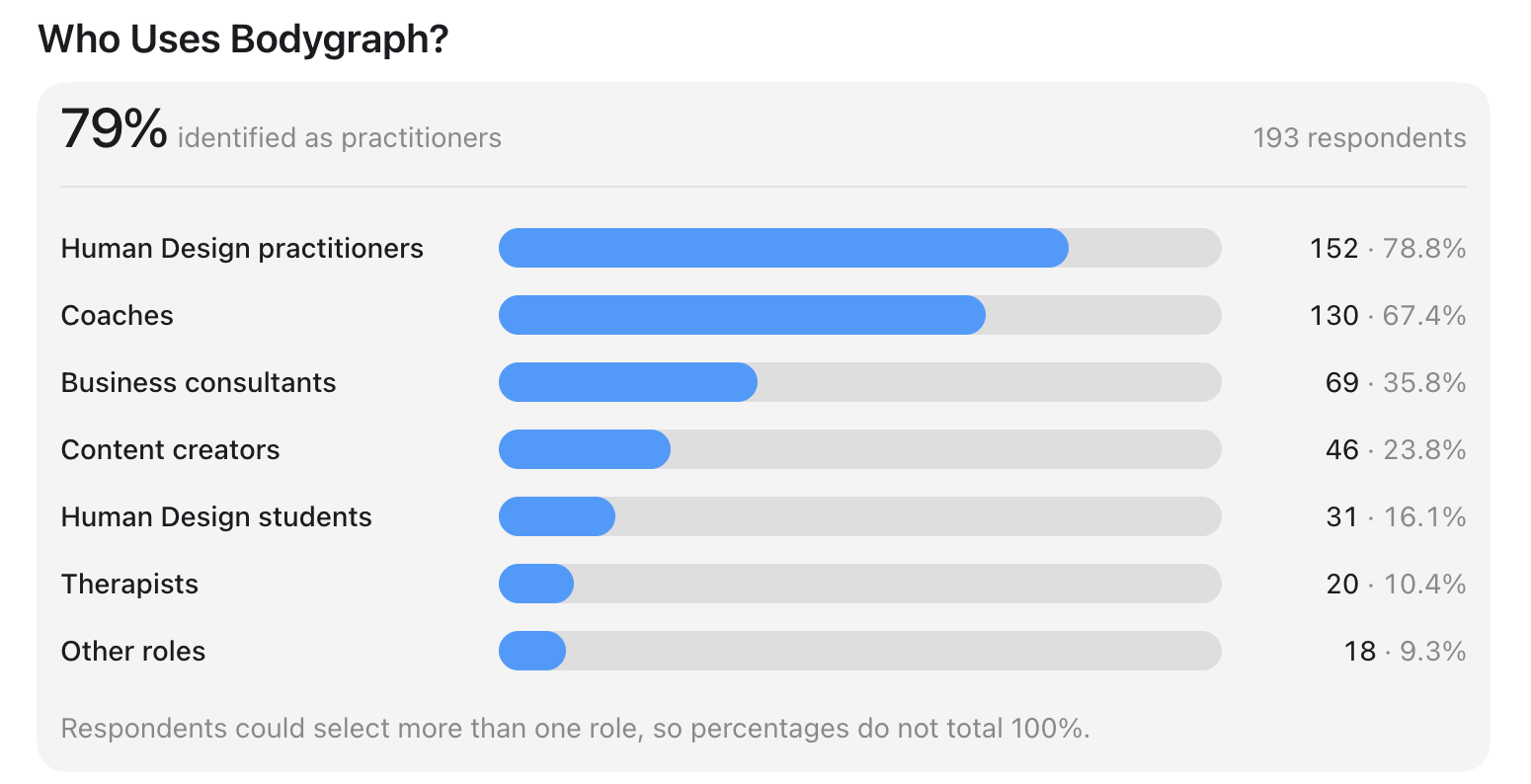
The results demonstrate that there is no single model for a Human Design business. Practitioners apply their knowledge in different industries and serve different types of clients.
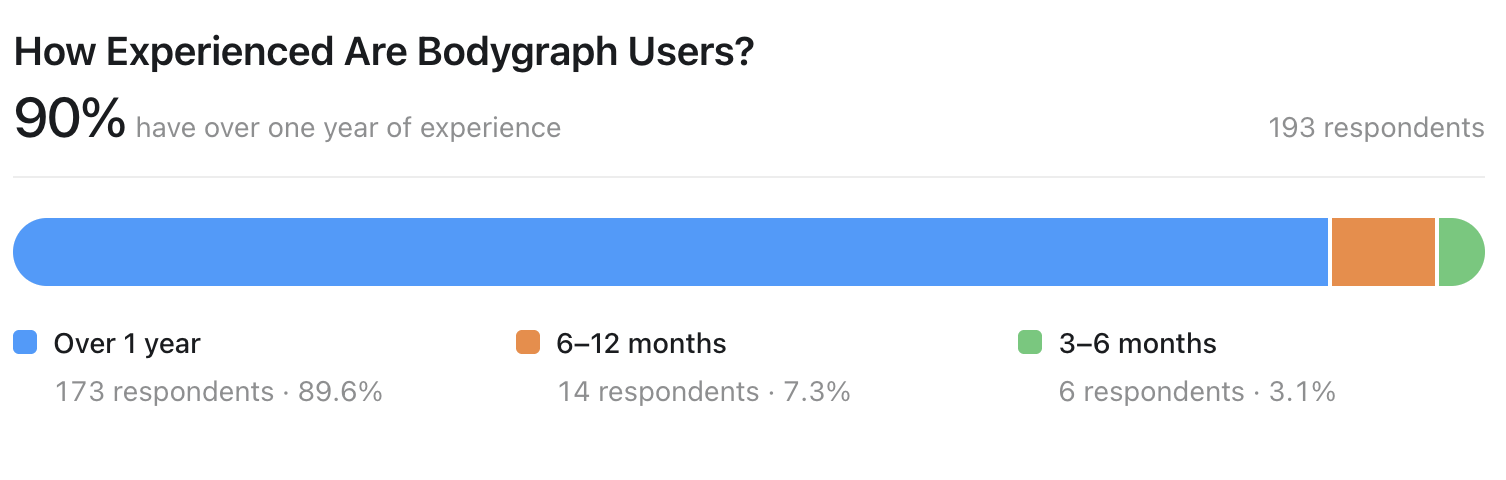
How Experienced Are Bodygraph Users?
Most survey respondents had significant experience with Human Design.
- 173 respondents had worked with Human Design for more than one year.
- 14 had between six and 12 months of experience.
- Six had between three and six months of experience.
This means approximately 90% of respondents had worked with Human Design for more than one year.
The findings therefore reflect the experiences of people who have spent meaningful time studying or applying Human Design. Experienced practitioners are likely to understand the practical requirements of preparing charts, delivering readings and communicating complex information to clients.
How Do Human Design Practitioners Use Bodygraph?
Human Design practitioners use Bodygraph to generate charts, prepare personalised reports and support professional client services.
The most common uses mentioned in the survey included:
- Generating Human Design charts for clients.
- Creating personalised reading reports.
- Preparing materials for client sessions.
- Providing clients with information after a reading.
- Sharing charts through practitioner websites.
- Supporting coaching and consulting services.
- Creating paid Human Design products.
These activities show that professional Human Design software can become part of the infrastructure behind a practitioner’s business.
Why Are Personalised Human Design Reports Important?
Personalised reports help practitioners translate complex chart information into a structured resource that clients can understand and revisit.
A report may be provided before a reading, used during a consultation or delivered as a reference after a session. It can also support clients who prefer to learn by reading information at their own pace.
Reports appeared repeatedly in respondents’ explanations of why they joined Bodygraph. Participants mentioned creating reports, delivering charts to clients and selling personalised Human Design products.
Technology can reduce repetitive production work, but it does not replace the practitioner. The practitioner remains responsible for interpretation, context, communication and the relationship with the client.
Do Bodygraph Users Recommend the Platform?
Bodygraph received an average recommendation score of 9.44 out of 10 from the 193 survey respondents.
- 139 respondents gave Bodygraph a score of 10.
- 22 gave it a score of nine.
- 14 gave it a score of eight.
- 15 gave it a score of seven.
- Three selected a score below seven.
More than 72% of respondents gave Bodygraph a perfect score of 10. More than 83% selected either nine or 10.
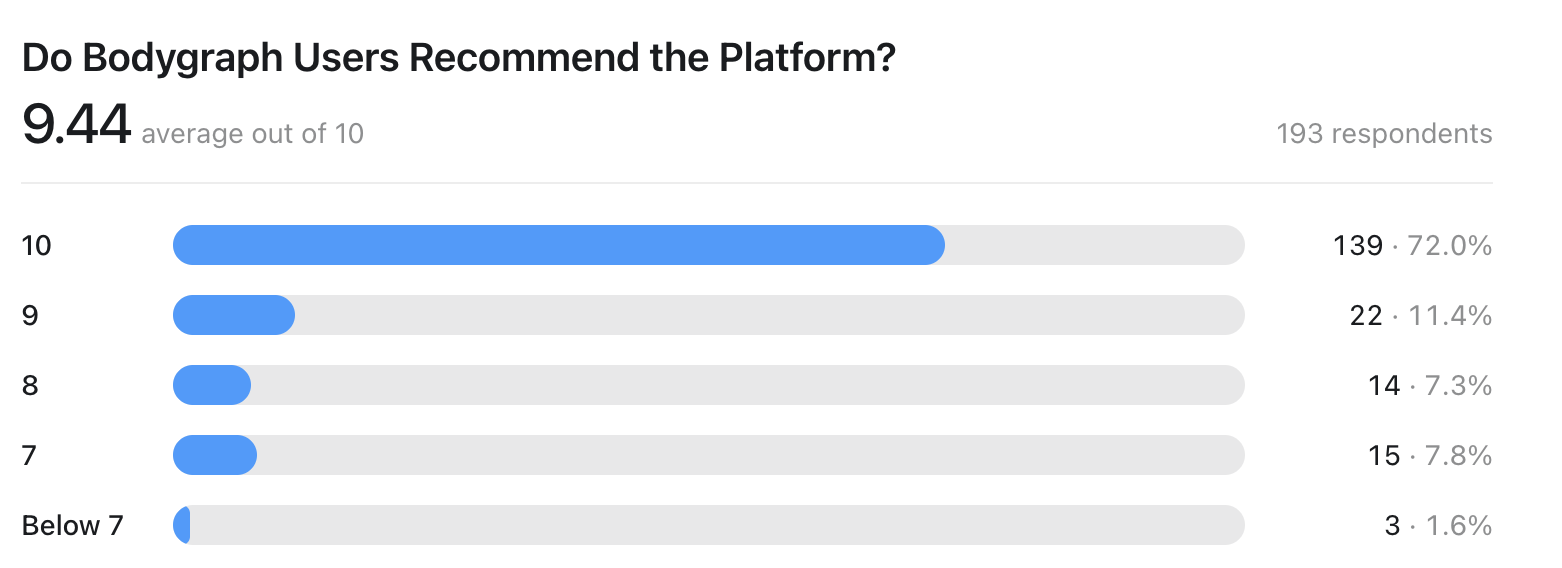
These results indicate a high level of satisfaction among the Bodygraph users who completed the survey. They should not be interpreted as a comparison with other Human Design platforms because the survey did not ask respondents to evaluate competitors.
How Engaged Is the Bodygraph Community?
The survey asked participants whether they would consider joining a 20-minute feedback interview.
- 148 respondents said yes.
- 40 said maybe.
- Five said no.
More than 97% were therefore open or potentially open to a further conversation.
This willingness to participate suggests that many users want to contribute their experience and help Bodygraph better understand the professional Human Design community.
Specific product requests and development priorities remain private. However, the survey demonstrates that practitioners value technology that supports efficient work and professional client delivery.
Which Mobile Devices Do Human Design Practitioners Use?
Among the 184 respondents who answered the device question, 136 selected iPhone and 48 selected Android.
- 74% selected iPhone.
- 26% selected Android.
The results show that mobile access is relevant to Human Design practitioners. Professionals may need to review information before a client session, work while travelling or access charts away from a desktop computer.
These figures describe the survey participants who answered this question and should not be treated as the device distribution of the entire Human Design market.
Is Human Design an International Professional Field?
Bodygraph’s wider community extends across 55 countries. This international reach indicates that Human Design is studied and practised across multiple geographic markets.
The figure of 55 countries refers to Bodygraph’s wider published platform reach. It does not mean that the 193 survey participants represented 55 countries, as the survey results shown here did not include a geographic breakdown.
The professional roles represented in the survey also demonstrate the variety within the field. Human Design is being combined with coaching, business consulting, therapy, education and content creation.
Is There Room for New Human Design Practitioners?
The survey cannot determine the total size of the Human Design market or prove that it is not competitive. However, it shows that practitioners serve a wide range of professional and personal-development audiences.
A new practitioner does not need to serve every possible Human Design client. Building a focused practice may involve choosing a specific audience or area of expertise.
- Entrepreneurs and business owners.
- Parents and families.
- Couples and relationships.
- Creative professionals.
- Coaching clients.
- Teams and organisations.
- People navigating career changes.
- People beginning a personal-development journey.
The opportunity lies in developing genuine expertise, defining a clear audience and creating a professional client experience. The survey does not promise business success, but it demonstrates that Human Design is already being applied across several professional disciplines.
How Can Software Help a Human Design Business Grow?
Software can help Human Design practitioners reduce repetitive preparation and deliver information more consistently.
As a practice grows, each new client may require chart preparation, written explanations, session materials and follow-up communication. Completing every part of this process manually can take considerable time.
Appropriate technology can give practitioners more time to focus on work that depends on human expertise.
- Listening to clients.
- Interpreting individual charts.
- Explaining Human Design clearly.
- Teaching relevant principles.
- Supporting practical application.
- Building trusted client relationships.
The objective is not simply to serve more people. It is to create a consistent client experience while maintaining the quality and personal value of the practitioner’s work.
What Does the Survey Tell Us About Human Design Practitioners?
The survey describes an experienced and engaged professional community.
Approximately 90% of respondents had worked with Human Design for more than one year. More than 83% gave Bodygraph a recommendation score of nine or 10, and more than 97% were open or potentially open to participating in a feedback interview.
The participants included Human Design practitioners, coaches, consultants, therapists, students and content creators. Their responses show how Human Design knowledge is being incorporated into client readings, reports, coaching and professional services.
Technology can help these practitioners organise and scale their work, but their knowledge, perspective and relationship with each client remain central to the experience.
Frequently Asked Questions
How many people participated in the Bodygraph survey?
The Bodygraph community survey collected 193 responses over 11 days.
How experienced were the survey respondents?
Approximately 90% had worked with Human Design for more than one year. This included 173 of the 193 respondents.
What was Bodygraph’s average recommendation score?
Bodygraph received an average recommendation score of 9.44 out of 10. A total of 139 respondents gave it a perfect score of 10.
What professions were represented?
The respondents included Human Design practitioners, coaches, business consultants, content creators, students and therapists. Participants could select more than one professional role.
What do practitioners use Bodygraph for?
Respondents commonly mentioned generating charts, producing personalised reports, preparing client materials and supporting Human Design readings, coaching and consulting services.
Does the survey prove that the Human Design market is not competitive?
No. The survey describes Bodygraph users and does not measure total market size or competition. It does show that Human Design is being applied across several professions and that Bodygraph’s wider community extends across 55 countries.
About the Survey
The Bodygraph community survey collected 193 responses over 11 days. Respondents could select multiple professional roles, so the role totals exceed the number of individual participants.
The mobile-device question received 184 answers. The 55-country figure refers to Bodygraph’s wider published platform reach rather than the geographic distribution of the survey respondents.
Published by Bodygraph. Survey results reviewed July 2026.